
How CLM supports EBA and ECB expectations on outsourcing and third‑party risk management
European supervisors no longer assess outsourcing frameworks at policy level alone. The European Banking Authority (EBA) and the European Central Bank (ECB) increasingly expect institutions to demonstrate end-to-end lifecycle control, from pre-outsourcing risk assessment to contractual safeguards, continuous monitoring, and realistically executable exit strategies.
In this environment, Contract Lifecycle Management (CLM) is not merely a document repository. When properly implemented, it becomes a contractual control layer that structures outsourcing data, embeds safeguards into workflows, and enables defensible oversight across the entire third-party lifecycle.
This article will cover:
- How CLM supports EBA and ECB outsourcing and third-party risk guidelines
- Practical ways CLM technology addresses each phase of third-party risk management
- CLM’s role in strengthening oversight of cyber and concentration risks
Aligning CLM with EBA and ECB outsourcing guidelines
The EBA Outsourcing Guidelines, in force since 2019, clear expectations for how financial institutions should manage outsourcing and third-party risk. These cover all sectors, including banking and payments. The guidelines require institutions to show control over the entire outsourcing lifecycle, starting with risk identification, due diligence, and flowing through ongoing monitoring, audit rights, and defined exit strategies.
The 2025 draft updates go a step further. They expand the scope beyond traditional outsourcing, covering most third-party arrangements that are not already addressed under DORA for ICT providers. The revised approach puts greater emphasis on proportionality, stronger oversight of sub-outsourcing, concentration risk management, and realistic, structured exit planning. In short, regulators expect firms to understand their third-party exposure in a much broader and more integrated way.
The ECB reinforces these expectations, particularly in cloud outsourcing. Regulatory focus has intensified around vendor lock-in risk, concentration and dependency risk, complex sub-outsourcing chains, access governance, encryption controls, and the feasibility of exit strategies aligned with contractual notice periods. Supervisors increasingly assess not just what contracts say, but whether contractual protections translate into operational capability. Where gaps exist, institutions may face remediation programs, fines, or reputational impact. Reliable and transparent processes are no longer optional.
How CLM platforms support every phase of third-party risk management
The EBA structures outsourcing governance around four stages: pre-outsourcing analysis, contracting, ongoing oversight, and exit planning. CLM delivers the most value when configured to support each stage systematically rather than focusing solely on document storage.
Risk assessment & due diligence
Before entering into any outsourcing or third-party arrangement, institutions need a clear understanding of the risks involved. Regulators expect firms to assess criticality and carry out thorough due diligence by looking at financial stability, cybersecurity maturity, operational resilience, and subcontracting risks.
CLM platforms support this phase by linking due diligence directly to the contract process. Risk scoring models, vendor categorization, and structured assessment workflows help ensure that evaluations are completed, documented, and traceable. Instead of risk assessments living in separate spreadsheets or emails, they become part of the contractual record.
Contractual provisions
Regulatory guidance requires contracts to include clear safeguards, such as service level agreements (SLAs), audit rights, business continuity commitments, subcontracting restrictions, and defined exit provisions.
CLM systems help make this consistent. Approved templates and playbooks help ensure that required protections are built into contracts from the start. Governance riders, performance metrics, remediation clauses, and regulatory safeguards can be embedded directly into contract templates, reducing inconsistency and ensuring required protections are not overlooked.
Monitoring & reporting
Regulators place strong emphasis on ongoing oversight. Institutions must monitor KPIs, track incidents, maintain auditability, and be able to demonstrate continuous supervision of critical third parties.
CLM platforms provide centralized dashboards, automated renewal and obligation alerts, performance tracking, and structured incident logging. This helps make oversight more systematic, while also supporting faster, more reliable regulatory reporting within a broader risk management framework.
Termination & Exit
Supervisory authorities expect exit planning to be realistic, pre-defined, and operationally feasible, especially for critical or high-risk outsourcing. This includes continuity testing, transition support, and secure data handover.
CLM solutions help by keeping exit clauses visible, tracking termination rights, and supporting structured offboarding workflows. With clear documentation and defined steps, institutions are better prepared to disengage from a provider without operational disruption or regulatory breaches.
CLM features mapped to EBA/ECB expectation
| What regulators expect | How CLM helps in practice |
|---|---|
| A management body–approved outsourcing policy with clear accountability | Policy-aligned templates, structured approval workflows, and traceable audit trails demonstrate governance and defined responsibilities. |
| An up-to-date outsourcing register in processable electronic form | A centralized repository with structured metadata enables exportable, structured reporting aligned with supervisory requirements. |
| Risk-based classification and differentiated treatment of critical outsourcing | Built-in classification workflows trigger enhanced clauses, approvals, and oversight for high-risk arrangements. |
| Mandatory contractual safeguards for critical or important functions | Approved templates and playbooks standardize audit rights, data protection, BCM, SLAs, and termination provisions. |
| Transparency into sub-outsourcing chains | Structured subcontractor data and reporting that reveal dependencies across supplier layers. |
| Continuous monitoring and board reporting | Obligation tracking, dashboards, and alerts support systematic oversight and reporting. |
| Documented and feasible exit strategies | Exit clauses, structured exit plan storage, and workflow-driven termination management support defensible readiness. |
Managing cyber and concentration risks through contracts
Regulators are paying closer attention to cyber risk and concentration risk, especially where critical services depend on major cloud providers or complex subcontracting chains. The EBA and ECB expect institutions to understand who they rely on, how those providers manage cyber security, and what happens if something goes wrong.
This goes beyond mapping vendors. Supervisors increasingly look at systemic exposure. For example, whether multiple critical services depend on the same provider, region, or technology stack. Concentration risk is now a resilience and governance issue that requires visibility at management and board level.
Contracts are central to managing these risks. They define audit rights, incident notification timelines, security standards, portability provisions, and termination triggers.
While CLM does not eliminate dependency or technical lock-in, it helps:
- Surface provider concentration through structured metadata
- Standardize portability and audit clauses
- Track subcontractor changes
- Support board-level reporting on dependency exposure
In this sense, contracts become enforceable tools for resilience governance.
Read next: 10 best contract management software in 2026
🔑 Key takeaways
- Regulatory scrutiny has shifted from policy review to proof of control.
Firms must be able to demonstrate traceable decisions, clear ownership, and contract-level evidence. - Third-party risk now goes beyond classic outsourcing.
The scope is expanding, and firms are expected to understand their wider network of suppliers and subcontractors. - Concentration risk is a leadership issue.
If too many critical services depend on the same provider or cloud platform, it becomes a resilience and governance concern. - CLM technology helps enables consistency and defensibility.
Embedding risk assessments, approvals, and monitoring into a CLM system helps make oversight more structured and easier to demonstrate.
For financial institutions navigating intensified EBA and ECB expectations, structured contract governance is no longer optional. When configured thoughtfully, CLM becomes a foundational component in demonstrating accountability, resilience, and sustained control over third-party risk.
FAQs
Supervisors are no longer satisfied with strong policies on paper. They now expect firms to show real, end-to-end control, from the initial risk assessment to what happens if the relationship needs to be terminated. It’s about proving that oversight works in practice, not just in theory.
The draft updates widen the lens. They go beyond traditional outsourcing and cover most third-party relationships that aren’t already captured by DORA. There’s a stronger focus on managing subcontractors, avoiding over-reliance on single providers, and making sure exit plans are realistic and workable.
No. Increasingly, supervisors want to see that contractual protections actually translate into operational capability. For example, it’s not enough to have an exit clause. Firms must show they could realistically execute it, especially in complex cloud arrangements.
When set up properly, a CLM system supports the full lifecycle: documenting risk assessments, embedding required safeguards into contracts, tracking obligations and performance, and keeping exit plans structured and accessible. It helps turn contracts into active governance tools rather than static documents.
Compare European CLM leaders
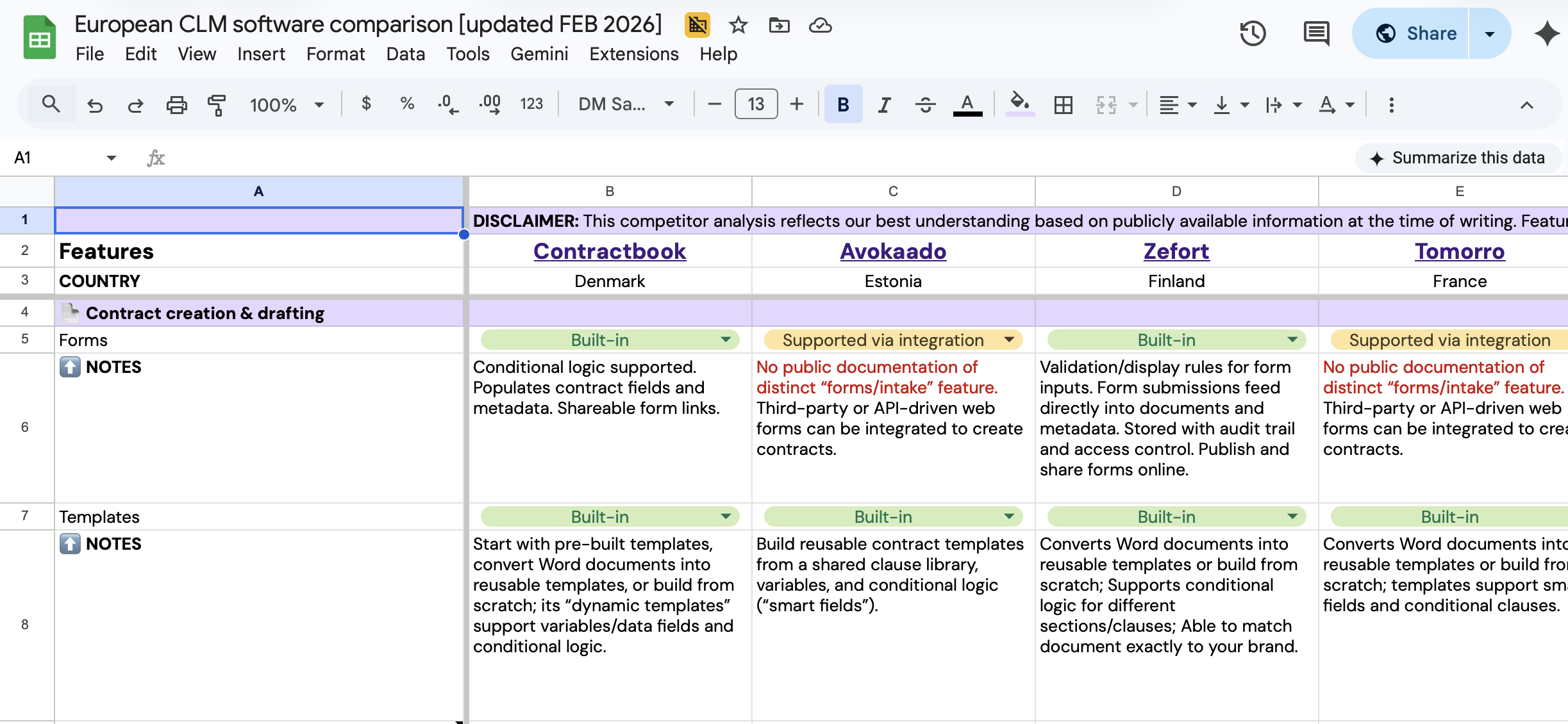
Get a comprehensive breakdown of the top CLM solutions in one spreadsheet.

Compare European CLM leaders
Get a comprehensive breakdown of the top CLM solutions in one spreadsheet.