Closing the gaps: using CLM to mitigate contract leakage
Contract value leakage, the difference between what’s negotiated in agreements and what organizations actually realize, averages 8.6-12.4% of annual revenue across industries. Best-in-class companies contain leakage to 6.2%, largely by using robust contract lifecycle management (CLM) systems. For regulated sectors like banking, insurance, life sciences, healthcare, and manufacturing, effective CLM plugs leaks by addressing both pre-signature and post-signature gaps. This article explains what drives contract leakage, where regulated industries face unique risks, and how a high-functioning CLM helps close the gap to recover revenue.
- How contract leakage erodes value in regulated and non-regulated sectors
- Real-world causes, with emphasis on EU regulatory frameworks like DORA (EU Digital Operational Resilience Act) and NIS2 (Network & Information Security Directive)
- Proven CLM strategies, automation, obligation tracking, and integration to minimize leakage
- The business impact and ROI of closing leakage, especially for heavily regulated industries
What contract leakage is and why it matters
Contract leakage happens when expected benefits, cost reductions, revenue protections, and risk mitigations diminish due to weak contract management. Leakage can surface anywhere: ambiguous language, missing clauses, poor data handover, or simply failing to track deliverables. For the EU’s regulated sectors, even a small oversight can lead to disputes, compliance fines, and operational disruptions.
The impact is not hypothetical. For a €500M bank, 8.6% leakage equals €43M lost per year, erasable with better contract controls. In life sciences or manufacturing, unclear IP clauses or unmanaged supplier terms create unauthorized tech transfers or scope creep. Healthcare contracts lacking tracked performance metrics can result in provider overpayments and compliance breaches.
Key causes of contract leakage
- Pre-signature: Unclear service level agreements (SLAs), incomplete due diligence, poor negotiation yielding suboptimal terms, or missing protective clauses increase risk from the start.
- Post-signature: Untracked obligations such as missed milestones, invoice discrepancies, missed renewals (leading to automatic renewals), and scope creep all erode expected value.
- Regulatory gaps: Unmonitored compliance with frameworks like DORA for financial services or NIS2 for critical infrastructure can trigger legal and financial consequences.
How CLM closes the leakage gap
CLM platforms automate and enforce every stage, limiting data silos, human error, and missed deadlines. Industry leaders credit CLM with reducing leakage by as much as 35%. Here are the primary ways CLM blocks revenue loss and increases revenue assurance:
- Automated templates and playbooks: CLM uses content-locked templates and clause libraries, reducing inconsistent wording and pricing erosion from one-off negotiations.
- Obligation tracking with proactive alerts: Automated reminders prompt teams about milestone deliverables, SLA reporting, and automatic renewals, supporting more captured discounts.
- Centralized visibility for commercial audits: A single source of truth allows legal, procurement, and business teams to run searches, validate compliance, and flag risk before contract management audit periods.
- Workflow integration: Linking contracts with CRM and ERP systems stops gaps where revenue, billing, or tasks fall through. Assigning clear owners for obligations and approvals reduces scope creep.
- Training and phased rollout: Adoption accelerates with onboarding and contract audits, identifying and eliminating legacy contract gaps.
Strategies for regulated industries
Regulated sectors like healthcare, banking, insurance, and life sciences face unique leakage drivers. Compliance frameworks such as DORA and NIS2 elevate the risk landscape. In these contexts, even minor omissions can result in legal exposure, substantial fines, or operational bottlenecks.
Here’s a phased approach widely used among successful firms:
- Quick wins (0–3 months): Inventory every contract, standardize deal naming, and calculate your organization’s leakage baseline.
- CLM deployment (3–12 months): Select a platform with compliance tracking, automated alerts, and cross-functional user training.
- Optimization (ongoing): Monitor KPIs, especially legal intervention rates and post-signature obligation compliance, to identify new leakage risks over time.
Business impact and ROI
A CLM system delivers measurable financial and compliance gains across industries:
- Healthcare: Automated tracking stops excess payments and flags vendor SLA failures, preventing contract disputes.
- Banking/Insurance: DORA-compatible CLM tools capture deviations and prevent fines that often reach millions of euros.
- Life Sciences/Manufacturing: By enforcing IP and deliverable obligations, firms cut disputes and missed revenue from contract ambiguities.
Global benchmarks show that CLM adoption transforms contracts into reliable governance frameworks, shifting legal teams from reactive fire drills to proactive value protection. The return is measurable; less leakage, greater compliance, and more time for strategic projects rather than commercial audits and firefighting.
Read next: How can financial institutions future proof for changes in regulation such as DORA and NIS2?
🔑 Key takeaways
- Contract leakage erodes 8.6-12.4% of annual revenue, with regulated industries at heightened risk.
- CLM provides automation, visibility, and tracking, thus significantly reducing leakage.
- Best practices include automated templates, proactive alerts, and integration to address both pre- and post-signature risks.
- Healthcare, banking, life sciences, and manufacturing recover lost value through structured rollout, commercial audits, and compliance-driven controls.
- Closing contract leakage improves revenue assurance, reduces legal exposure, and supports long-term operational efficiency.
FAQs
Contract value leakage is the gap between negotiated contract terms and the value actually achieved. In regulated industries like banking and healthcare, leakage can lead to lost revenue, compliance fines, and operational issues, often averaging 8.6-12.4% of annual revenue without proper controls.
Key causes include unclear service agreements, missing or ambiguous clauses, incomplete due diligence, failing to track deliverables, missed renewals, and lapses in compliance with regulations. Both pre-signature and post-signature gaps can contribute to unexpected losses.
CLM systems automate contract processes, standardize terms, track obligations, and provide proactive alerts. They centralize contract data, integrate with business tools, and help organizations monitor compliance, enabling them to address risks and recover potential lost value.
Regulated industries face stricter oversight and compliance requirements. Minor oversights, such as missing regulatory clauses or unmonitored obligations, can result in legal exposure or significant fines, making leakage prevention especially important.
Benefits include preventing overpayments, fewer compliance breaches, reduced legal disputes, and avoidance of fines. This not only protects revenue but also allows teams to focus more on strategic initiatives and less on administrative or corrective work.
Compare European CLM leaders
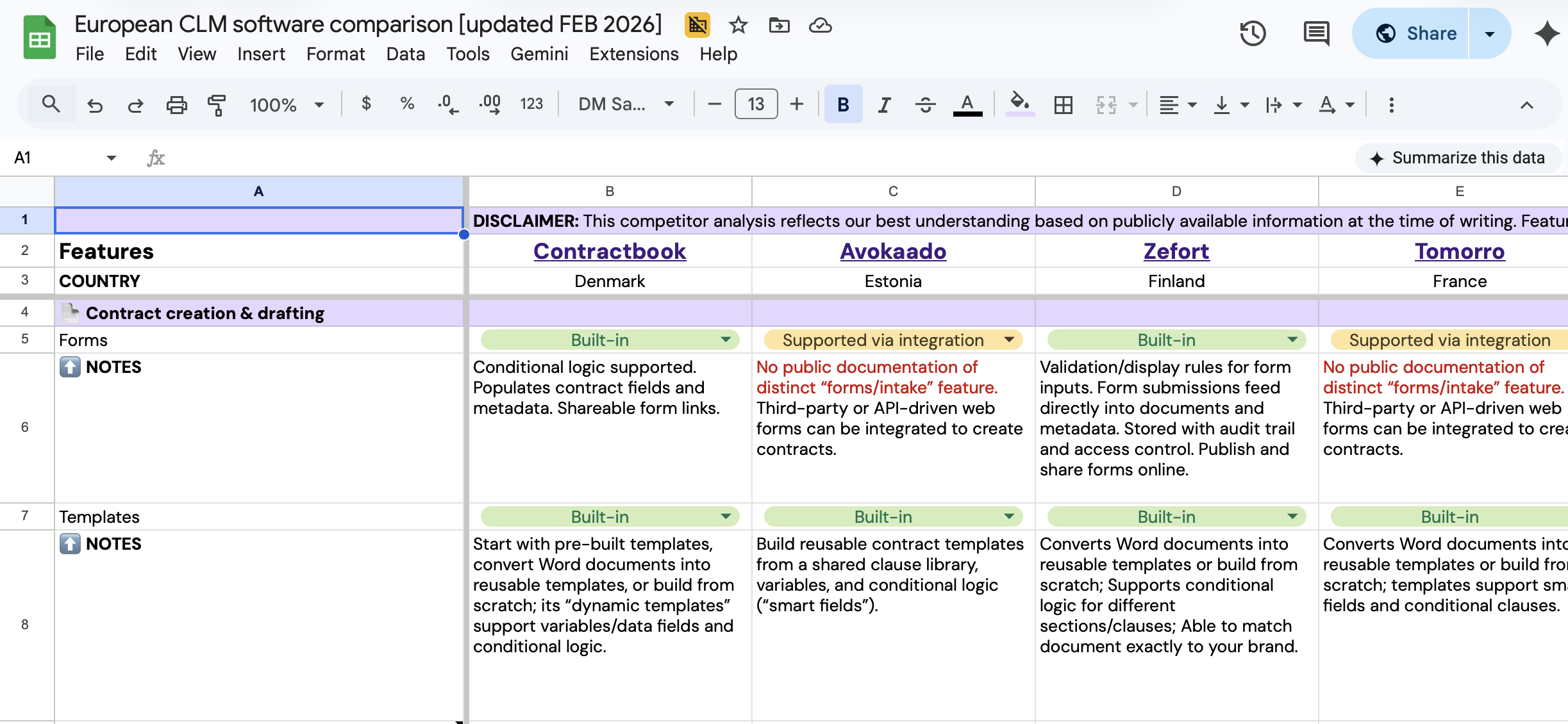
Get a comprehensive breakdown of the top CLM solutions in one spreadsheet.

Compare European CLM leaders
Get a comprehensive breakdown of the top CLM solutions in one spreadsheet.