Energy contract management: turning contract data into compliance and resilience
Energy contract management enables companies to transform energy contract data into actionable compliance tools. In a sector driven by strict oversight, dynamic markets, and long-term infrastructure, contracts can help you anticipate risks, achieve regulatory compliance, and build resilience. When structured well, your contracts become a source of operational intelligence, not just legal checkpoints.
What this article will cover:
- Why energy contracts must be treated as data sources for compliance and risk management
- How to organize and centralize contract data for regulatory resilience
- Ways to shift from reactive to proactive compliance monitoring
- Practical frameworks for governance, adaptability, and technology integration
The strategic imperative in energy contract management
Energy contracts have far-reaching effects on finance, safety, and sustainability. These documents embed regulatory mandates, pricing details, environmental standards, and infrastructure obligations. According to Thomson Reuters, organizations face intensifying regulatory complexity, geopolitical instability, ESG scrutiny, and supply chain risk. All of these vulnerabilities increasingly translate into contractual risk. For legal leaders, this means treating contracts as information hubs that enable real-time regulatory tracking, contract risk management, and informed decisions.
Core data governance: From repository to resilience
Centralizing your contract data makes it easier to spot compliance requirements across projects and jurisdictions. Use a repository that organizes agreements by regulatory area, asset, and contract type. This approach establishes the clear audit trail regulators expect and keeps asset management and energy trading contracts tightly aligned with compliance needs.
Energy market regulations are complex. Rely on precise tagging and a functional data taxonomy by jurisdiction, contract type, risk category, and performance obligation. Effective contract metadata extraction helps stakeholders pinpoint obligations and identify force majeure clauses, pricing triggers, and ppa compliance tracking needs quickly.
Shifting compliance monitoring: From reactive to proactive
Monitor independent KPIs using standardized, contract-specific calculations, not just operations data. This forensic review ensures actual outcomes match contractual and regulatory benchmarks. Diagnose discrepancies, flag noncompliance, and quantify contract risk management gaps before they escalate.
Routine audits and milestone notifications minimize the chance of missing critical deadlines or renewals. Automated systems alert teams about contract expiry, performance reviews, and new regulatory changes. For a company with contracts in several EU jurisdictions, this reduces compliance headaches and keeps audit preparation efficient.
Managing technological and regulatory complexity
As energy companies adopt AI analytics and cloud monitoring, contracts for these services introduce new compliance areas: liability for outages, data ownership, and performance guarantees. Use standardized templates in energy contract management software to systematize risk controls and ensure all requirements are tracked over time.
Energy trading contracts, PPAs, and infrastructure deals often span decades. Future-proofing means adding review intervals, amendment rights, and sustainability alignment, so agreements can adjust when the market, regulations, or company strategy changes. This is critical for renewable energy procurement, where environmental benchmarks become contract benchmarks.
Cross-functional governance and aligning with company goals
Legal, procurement, finance, and operations all intersect in contract management. Set up role-based access so stakeholders see what matters to them, while keeping data secure. Automated, tailored reporting fosters transparent, informed decision-making. Map energy contract terms directly to growth, cost control, and sustainability targets, especially as regulatory frameworks like DORA and NIS2 influence expectations across the EU.
Read next: How to choose the right CLM software for your organization
🔑 Key takeaways
- Centralized, well-tagged contract data improves compliance and risk visibility across assets and jurisdictions.
- Proactive monitoring of contract KPIs and automated alerts turn compliance from a reactive process into a strategic asset.
- Technological integration and standardized templates enable precise tracking, adaptation, and audit readiness.
- Cross-functional governance ensures contracts stay aligned with operational, regulatory, and sustainability goals.
FAQs
Effective contract management helps energy companies navigate complex regulations, mitigate financial and operational risks, and ensure compliance with legal and environmental standards. Poor contract oversight can result in significant financial penalties and missed obligations, severely impacting organizational resilience and performance.
Centralizing contract data allows companies to organize agreements by regulatory area, asset, and contract type. This approach streamlines compliance monitoring, facilitates clear audit trails, and enables rapid identification of obligations and risk exposures across multiple projects and jurisdictions.
Companies can implement standardized contract performance metrics and playbooks, conduct routine audits, and use automated alerts to flag discrepancies and upcoming obligations. Continuous monitoring enables timely action on deadlines and regulatory changes, reducing compliance risk before issues escalate.
Technology, such as contract management software and AI analytics, automates milestone tracking, compliance alerts, and reporting. This enhances transparency, ensures audit-readiness, and enables more informed, data-driven decision-making across legal, finance, and operational teams.
Proper contract management incorporates environmental performance metrics, sustainability requirements, and clear benchmarks into agreements. This enables companies to track progress on renewable energy targets and ensure suppliers meet defined sustainability criteria.
Compare European CLM leaders
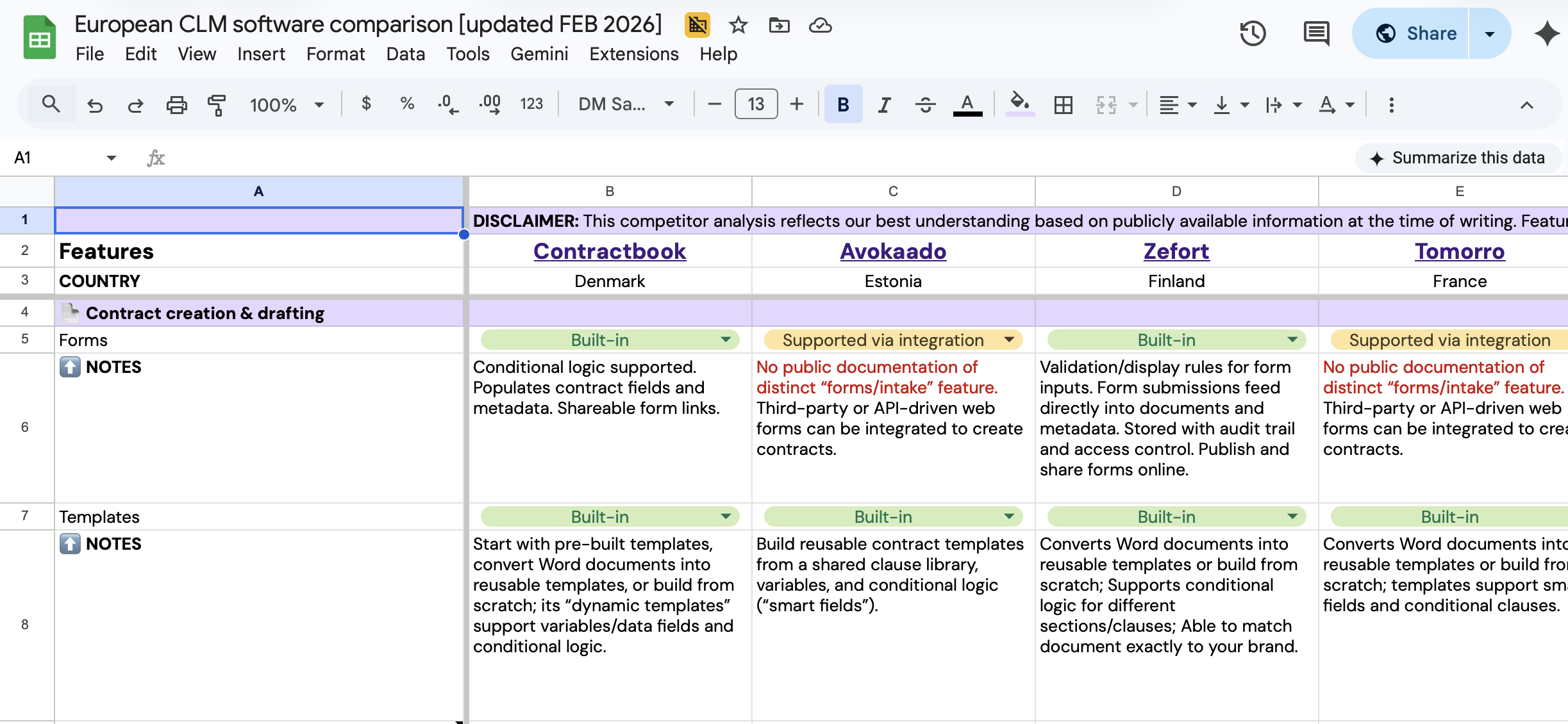
Get a comprehensive breakdown of the top CLM solutions in one spreadsheet.

Compare European CLM leaders
Get a comprehensive breakdown of the top CLM solutions in one spreadsheet.