
How to prepare for contract audits without last-minute chaos
Contract audits put your post-signature processes to the test, forcing organizations to prove compliance with terms, obligations, and regulations, often under tight deadlines. For legal and procurement teams, the real risk lies in fragmented storage and manual tracking, leading to undetected non-compliance, revenue loss, and failed audits. This article explains where contract audits get derailed, why maturity demands traceable records, and how continuous preparation replaces panic-driven reviews.
Key topics covered include:
- Why post-signature control is essential for audit-readiness
- The main risks tied to manual and fragmented contract storage
- How compliance-driven teams can avoid common audit failures
- What modern contract management audit requirements look like under NIS2 and ISO 27001
- How centralized, automated CLM makes audits easier for everyone
What is a contract audit
A contract audit checks whether your organization manages signed agreements according to internal policies and regulatory standards. These audits require extensive proof, through traceable actions, access logs, and up-to-date documentation, not just file storage.
Manual tracking with shared drives or spreadsheets quickly becomes unreliable as volumes grow. Legal teams lose track of obligation fulfillment; procurement struggles with supplier performance and renewals; finance can’t consistently enforce payment terms. Compliance audit preparation gets overwhelmed by the lack of version control and secure, centralized records.
The hidden cost of poor audit readiness
Recent research by WorldCC shows that weak contract management leads to an average revenue leakage of 8.6% from missed renewals and unenforced clauses, rising to 15% in more complex industries. Legal teams spend 20-30% of their time on manual contract review processes, usually due to fragmented documentation and a lack of traceability.
When audits approach, preparation can take weeks, as teams scramble to compile records from multiple sources. For organizations regulated under NIS2, non-compliance can mean fines exceeding €10M and significant reputational risk. At scale, operational friction grows, audit cycles disrupt business continuity, and missed obligations go unnoticed.
How audit challenges appear in real organizations
Many organizations rely on outdated or piecemeal methods for contract management, including:
- Physical storage: Searching file cabinets during a contract management audit slows response times and risks missing documents.
- Shared drives: Version chaos leads to uncertainty about which document is authoritative, with no reliable change history.
- Email approvals: Approval trails scatter across inboxes, making them nearly impossible to track or audit.
- Spreadsheets: Manual reminders and owner lists quickly become outdated, causing missed deadlines and untracked obligations.
- Legacy CLM: Rigid systems built for pre-signature workflows often ignore post-signature oversight, leading to inconsistent updates and incomplete audit trails.
During audits, these gaps force teams to abandon routine work for urgent, manual record assembly. This reactive approach exposes process failures instead of surfacing compliance confidence.
Why compliance-focused teams need proactive contract audit preparation
For teams managing regulated data, such as those affected by NIS2 or ISO 27001, audit-readiness isn’t optional. Auditors demand clear documentation of who accessed what, when changes were made, and how obligations were met. Delays or gaps can trigger financial penalties and erode trust, internally and externally.
Procurement and legal operations must handle growing contract portfolios without adding complexity. When systems are lacking, operational teams spend more time compiling compliance reports instead of driving core business activities. At scale, these inefficiencies multiply, increasing risk and reducing business agility.
Read next: A comprehensive guide to today’s CLM
How centralized, automated CLM solves contract audit challenges
A centralized contract repository with automated audit trails removes friction from audit processes. Solutions like Zefort focus on the post-signature contract review process, providing:
- AI-powered metadata extraction to track key clauses (payment terms, renewals, regulatory requirements) instantly
- Custom forms for tracking supplier compliance, including NIS2 or ESG requirements
- Automated reminders for key dates and reviews, reducing reliance on email or manual lists
- Role-based access controls and full audit trails for every action, supporting secure, regulatory-aligned workflows
These features shift teams from scramble-mode to continuous compliance, supporting easy reporting and verification for external auditors. Real-time data increases confidence and frees legal and procurement from routine manual checks.
🔑 Key takeaways
- Contract audits test post-signature processes, not just document storage: traceability, access control, and obligation tracking are critical.
- Fragmented storage and manual tracking are the most common reasons audits fail, leading to compliance gaps, revenue leakage, and operational disruption.
- Regulations such as NIS2 and ISO 27001 require clear audit trails showing who accessed contracts, what changed, and how obligations were fulfilled.
- Panic-driven audit preparation consumes weeks of legal and procurement time and exposes process weaknesses instead of proving compliance.
- Centralized, automated CLM enables continuous audit readiness by maintaining structured data, immutable audit trails, and role-based access control.
- Teams that invest in post-signature control reduce audit risk, protect revenue, and free legal and procurement to focus on strategic work.
FAQs
A contract audit verifies whether signed agreements are managed according to internal policies and regulatory requirements. It matters because auditors expect traceable evidence of access, changes, and obligation fulfillment – not just stored documents.
Most audits fail due to fragmented storage, manual tracking, and missing audit trails. When contracts, approvals, and obligation data are spread across drives, emails, and spreadsheets, teams struggle to prove compliance under time pressure.
Post-signature control ensures that obligations, renewals, access rights, and changes are tracked continuously. This makes audit evidence readily available and reduces last-minute manual work when audits begin.
NIS2 and ISO 27001 require organizations to demonstrate secure access control, traceability, and risk management processes. Contracts must show who accessed them, what changed, and how regulatory obligations were enforced.
They lack version control, reliable access logs, and structured audit trails. As contract volumes grow, these tools become error-prone and make it difficult to prove compliance consistently.
Centralized CLM systems provide a single platform with automated metadata, role-based access, and immutable audit trails. This allows teams to respond to audits quickly, confidently, and without disrupting daily operations.
Yes. Continuous audit readiness replaces panic-driven reviews with ongoing compliance. Teams spend less time compiling evidence and more time managing risk, value, and supplier performance proactively.
Compare European CLM leaders
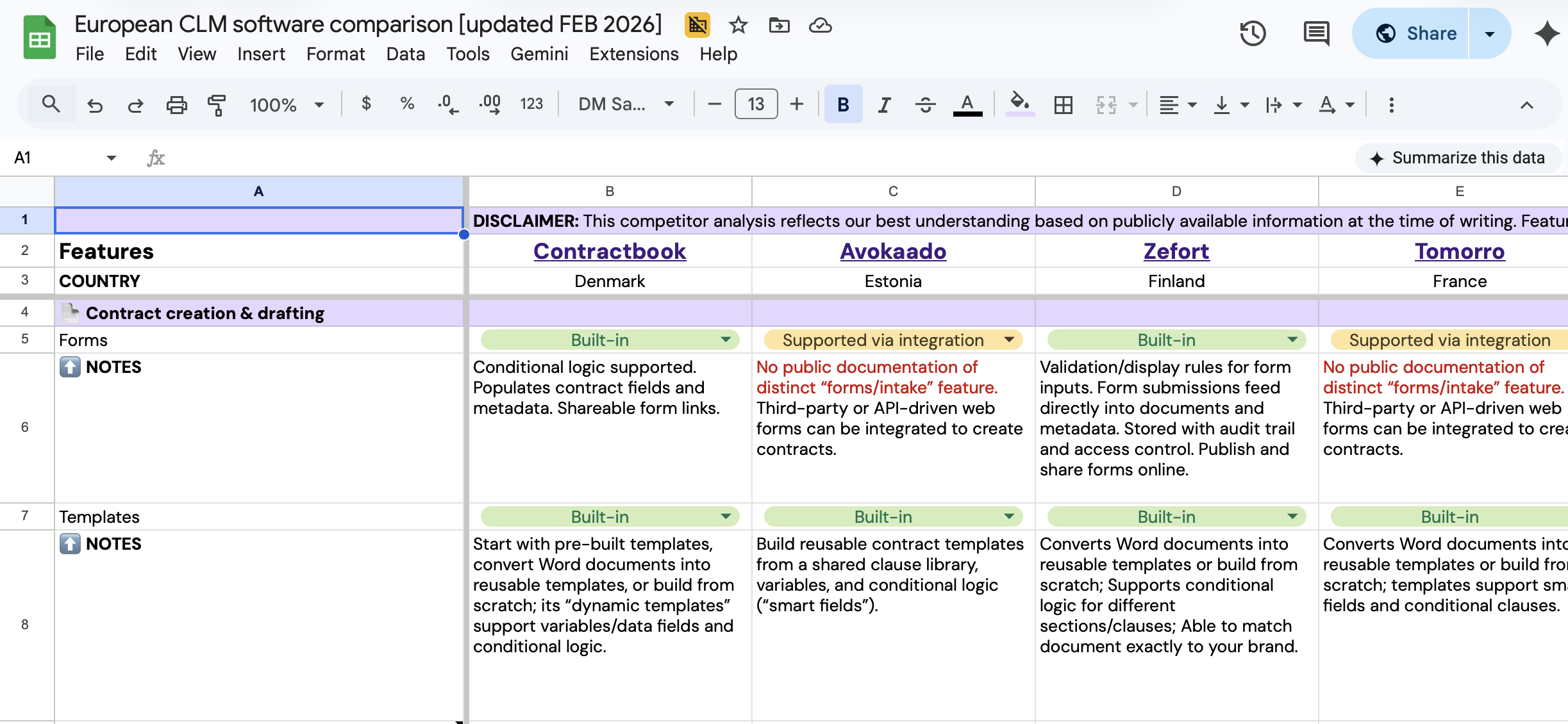
Get a comprehensive breakdown of the top CLM solutions in one spreadsheet.

Compare European CLM leaders
Get a comprehensive breakdown of the top CLM solutions in one spreadsheet.