Managing clinical trial agreements and NDAs at scale: why EU pharma needs CLM
Managing Clinical Trial Agreements (CTAs) and Non-Disclosure Agreements (NDAs) at scale brings a unique set of challenges for EU pharmaceutical companies. While the EU Clinical Trials Regulation (CTR, EU No 536/2014) and the Clinical Trials Information System (CTIS) were designed to harmonize multinational research, they have also introduced new layers of regulatory, contractual, and data-management complexity.
This article explores how EU regulatory changes are reshaping clinical research contracts and why robust contract lifecycle management (CLM) is critical for pharma organizations running trials across multiple EU countries.
- How EU regulations for pharmaceutical industry shape clinical trial agreement workflows
- The main risks, delays, and compliance requirements with clinical trial agreement management
- How CLM automation improves scale, speed, and transparency for EU clinical research contracts
How regulatory changes impact clinical research contracts
Since the CTR became fully applicable, all new clinical trial applications in the EU must be submitted via CTIS rather than through national authorities. In theory, CTIS provides a single digital entry point for sponsors. In practice, sponsors have reported significant national and institutional variation.
Ethics committees and competent authorities continue to apply divergent legal interpretations, language requirements, and documentation standards. Hospitals and academic research centers, particularly in markets such as Germany and France, can require NDAs before CTA negotiations can even begin, extending timelines and increasing administrative burden.
For large, multi-country trials involving dozens or hundreds of sites, this can result in parallel negotiations, fragmented documentation, and limited visibility into contract status across jurisdictions.
Key CTA and NDA management pain points in 2026
Despite regulatory centralization, sponsors face several persistent challenges:
- High volume and delays: Large, multi-country studies mean repetitive, time-consuming negotiation, delaying study start dates.
- Data quality and system alignment: Following the mandatory migration to CTIS by 31 January 2025, companies now grapple with maintaining consistent contract metadata, version histories, and safety documentation within the central platform.
- Growing transparency and disclosure obligations: EMA’s Policy 0070 requires publication of clinical reports submitted with marketing authorization applications (MAAs) for centrally authorized products. This makes confidentiality management more complex, especially during the transition from early research to MAA submission.
- Persistent national and institutional variations: Despite the CTR’s unified framework, national authorities and ethics committees continue imposing additional requirements, from country-specific GDPR clauses and pseudonymization standards to document translations and environmental risk statements, limiting full contractual harmonization across the EU.
Together, these issues shift contract management from a pre-study administrative task to a long-term compliance and risk-management function.
Why CLM is essential for EU clinical research
Manual or spreadsheet-based contract processes cannot match the volume nor the regulatory requirements intensity of today’s pharma CLM environment. Digital CLM platforms provide the infrastructure needed to manage CTAs and NDAs from drafting through execution, and, critically, through post-signature obligations.
Key capabilities include:
- Automated post-signature tracking: Real-time monitoring of contract obligations, automated alerts for renewals/amendments, and version control ensure alignment with evolving CTIS, EMA, and GDPR requirements across trial lifecycles.
- Continuous compliance and audit readiness: Audit trails, automated reminders, and in-line controls, such as playbooks, ensure contracts follow CTIS, EMA, and local requirements, including version control for updated regulatory documents.
- Scalable risk mitigation: Centralized NDA oversight and smart record-keeping prevent confidentiality breaches during multi-year trials, supporting pharmacovigilance, site amendments, and MAA transitions.
- Operational scalability: CLM handles expanding multinational trial networks by standardizing how contracts are monitored, amended, and reported across countries, rather than treating execution as the endpoint.
Without robust CLM, pharmaceutical companies risk underestimating the long-term effort required to manage clinical research contracts, leading to missed regulatory milestones, delayed submissions, and increased inspection exposure.
Explore next: 10 Best Contract Management Software in 2026
🔑 Key takeaways
Summary insights include:
- CTR/CTIS simplified submissions but amplified contract complexity through national variations, data quality challenges, and post-migration CTIS integration gaps.
- National GDPR differences + EMA Policy 0070 heighten the importance of centralized NDA oversight throughout the clinical trial lifecycle.
- Manual processes do not scale; digital CLM enables audit-ready workflows, proactive risk mitigation, and operational resilience for EU clinical research.
FAQs
While the EU CTR and CTIS centralized trial submissions, national authorities and ethics committees still apply country-specific legal, language, and documentation requirements. This results in parallel negotiations, additional NDAs, and increased contract complexity for multi-country trials.
In many EU markets, especially Germany and France, NDAs might be required before CTA discussions can begin. Managing NDAs separately helps ensure confidentiality during early-stage negotiations and supports compliance with GDPR and EMA transparency obligations later in the trial lifecycle.
Manual or spreadsheet-based processes limit visibility into contract status, increase the risk of missed amendments or renewals, and make it harder to maintain audit trails, exposing sponsors to delays, compliance gaps, and inspection findings.
CLM platforms track post-signature obligations, manage amendments and versions, and provide audit-ready documentation. This ensures contracts stay aligned with evolving CTIS requirements, national regulations, GDPR clauses, and EMA disclosure rules throughout the trial.
CLM centralizes CTA and NDA management across countries, standardizes workflows, and improves transparency. This helps enable sponsors to scale trial operations without increasing administrative burden or regulatory risk.
Compare European CLM leaders
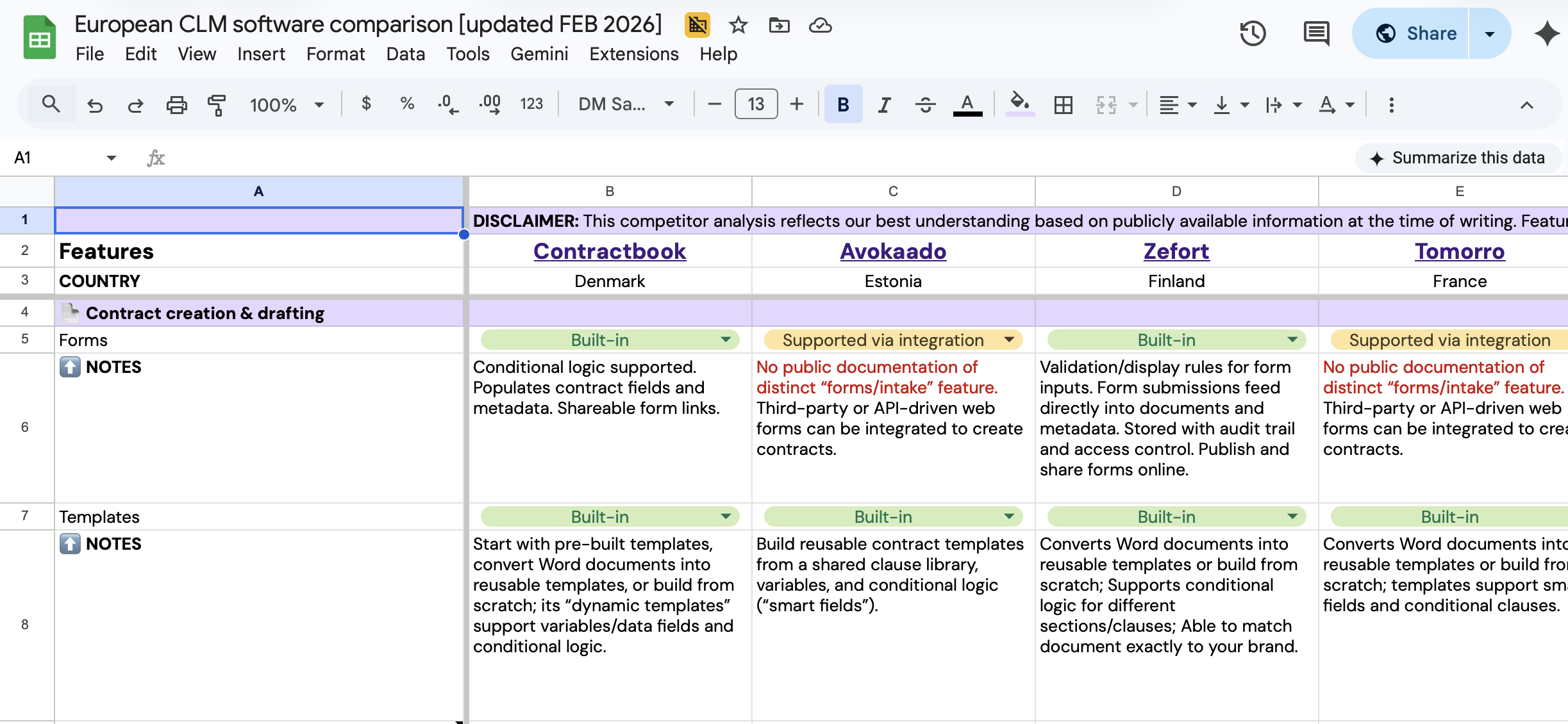
Get a comprehensive breakdown of the top CLM solutions in one spreadsheet.

Compare European CLM leaders
Get a comprehensive breakdown of the top CLM solutions in one spreadsheet.